
ARE WE THERE YET?
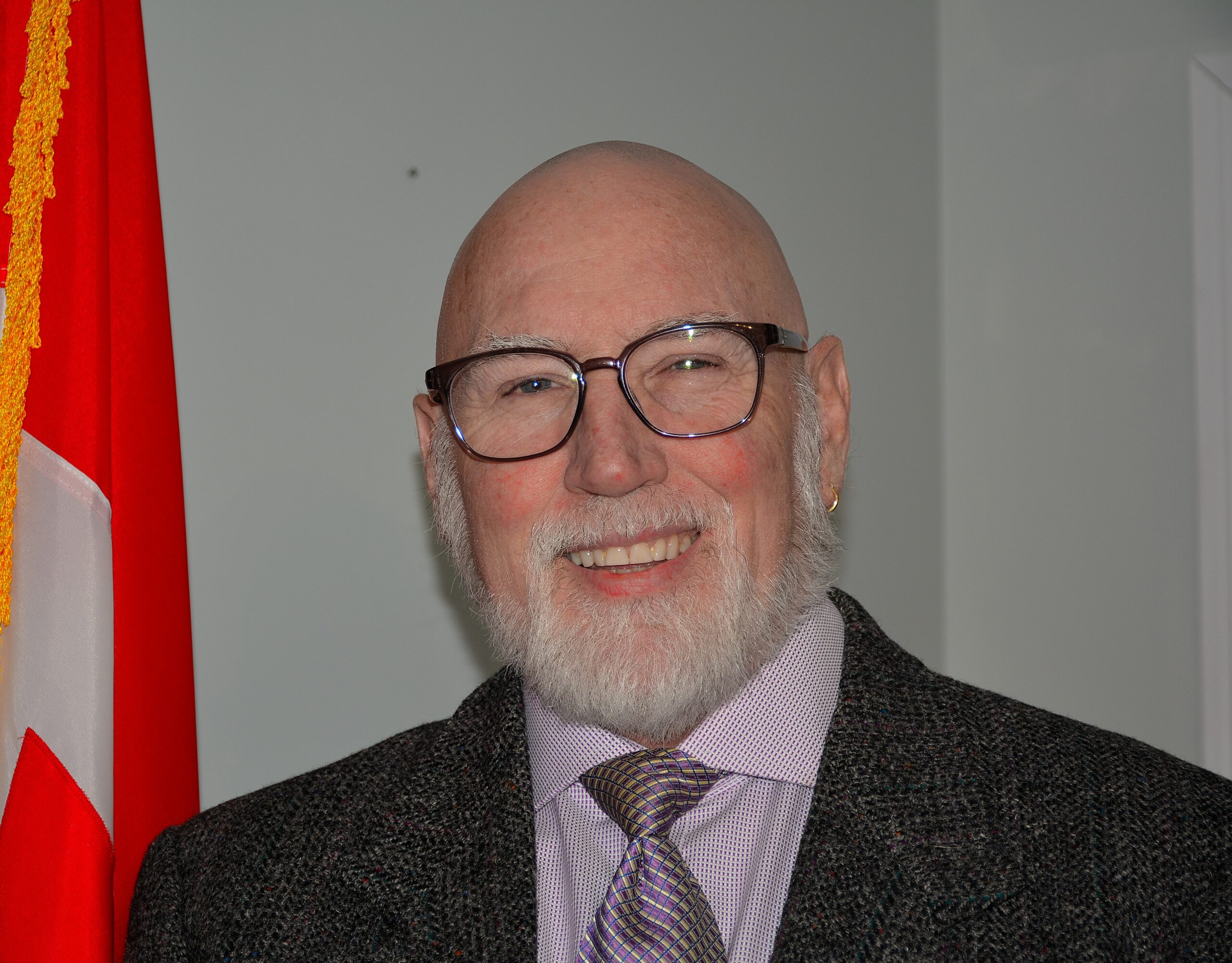
When I was a little boy, my father loved to take my whole family on long trips in our car. In his mind, this was the best way to experience Canada. My father served in the Canadian militia where he trained in armour (tank) support. He drove the huge trucks that carried tanks from one battlefield to another.
Driving for him was therapy, even with four unruly kids, and often a dog, in the car. Invariably, one of us kids would ask, “Are we there yet?” His answer was a simple and immediate “Shut up!”.
In 1983, I was a newly minted Commerce graduate, eager to get my career in the federal public service off to a blazing start. The recruitment program automatically enrolled me to obtain a Registered Industrial Accountants (RIA) designation.
This caused some confusion in my family, which has strong Irish roots. When asked by one of my many maiden or great-aunts, “And what is Bruce doing these days?”, my mother would reply, “Oh, he’s with the IRA.” You can’t make this stuff up.
On the very day I went to write my final RIA exam, I received a letter informing me that the RIA designation would now be known as Certified Management Accountant (CMA). I felt cheated. I had worked so hard to become an RIA — and my baby brother had just become a medical doctor. Two CMAs in the family from different professions was simply too much for my mother.
Fast forward thirty years. After a long career in government finance, I was fortunate to receive recognition for my work. In 2014, the profession was “unified” under a single designation — CPA. I added the FCPA designation alongside my existing FCMA.
But what did unification truly deliver? The combined profession grew from CA (78,000), CGA (75,000), and CMA (50,000) into a body of more than 200,000 members. While that created size, I remain unconvinced it created depth.
One consequence of unification, particularly noticeable to long-time observers, was the loss of the distinct strengths of the CGA and CMA designations, in favour of a traditional CA-centric focus. This shift weakened managerial accounting and management-focused insight, particularly in the public sector.
In 2023, Ontario and Quebec withdrew from CPA Canada, removing approximately 145,000 members from the national body. While members could opt in individually, transparency around participation has been limited.
This marked a major governance turning point and raised questions about sustainability. Subsequent by-law changes made CPA Canada membership optional nationwide. Member communications around these changes were limited, moderated, and lacked meaningful follow-up.
Membership fees were also cut from $400 to $200 annually — raising serious concerns about CPA Canada’s ability to support members after losing nearly $30 million in annual revenue.
Against this backdrop, alternative professional pathways are emerging. RPA Canada’s outreach to CMA Australia and international academic partners reflects a growing demand for flexible, practice-aligned professional recognition — including within Canada’s public sector.
So, after ten years of unification, perhaps it is time to pause, review the roadmap, and ask once again:
I can still hear my father’s voice.